 Arrival airport
 Airport drive
 Reservation demand
 Best season
Grand Canyon rewards more than a quick stop at an overlook. A short rim walk, a carefully chosen descent, and time watching the light change can make the landscape feel less like a photograph and more like a place. For a two- to four-day first visit, focus on the South Rim rather than trying to cover both rims, which are separated by a long road journey.
 Step 1
Walk the Rim and Explore the Scenic Roads
Start with Mather Point for a broad introduction, then follow a manageable stretch of the Rim Trail instead of immediately driving to another overlook. Many South Rim trail segments offer relatively gentle walking, though surfaces and accessibility vary. The canyon changes noticeably as your angle shifts, so a short walk can be more rewarding than another parking search.
Hermit Road and Desert View Drive offer additional viewpoints. Hermit Road has seasonal private-vehicle restrictions, with shuttle access during much of the year; check current operations before planning a drive. Desert View Drive works well as an unhurried outing with a few selected stops. Leave extra time for parking and changing weather.
 Step 2
Choose a Short Below-Rim Hike
Bright Angel Trail and South Kaibab Trail are well-known ways to experience the canyon from below the rim. Both descend steeply, and the return requires climbing every foot you have lost. For a first visit, choose a short out-and-back rather than letting the easy-feeling descent dictate your distance.
South Kaibab is exposed and has no water along the trail. Water availability elsewhere can change, so confirm conditions and carry what your plan requires. Heat, ice, closures, and your group's fitness should determine the route and turnaround point. Do not attempt to reach the Colorado River and return to the rim in a single day. Check official NPS hiking guidance before setting out.
 Step 3
Watch Wildlife and Understand River Access
Elk and mule deer are among the animals visitors may see around the South Rim, while ravens are frequent companions at overlooks. Watch from a distance, never feed wildlife, and keep food secured. Animals that appear accustomed to people are still wild, and close approaches create problems for both visitors and wildlife.
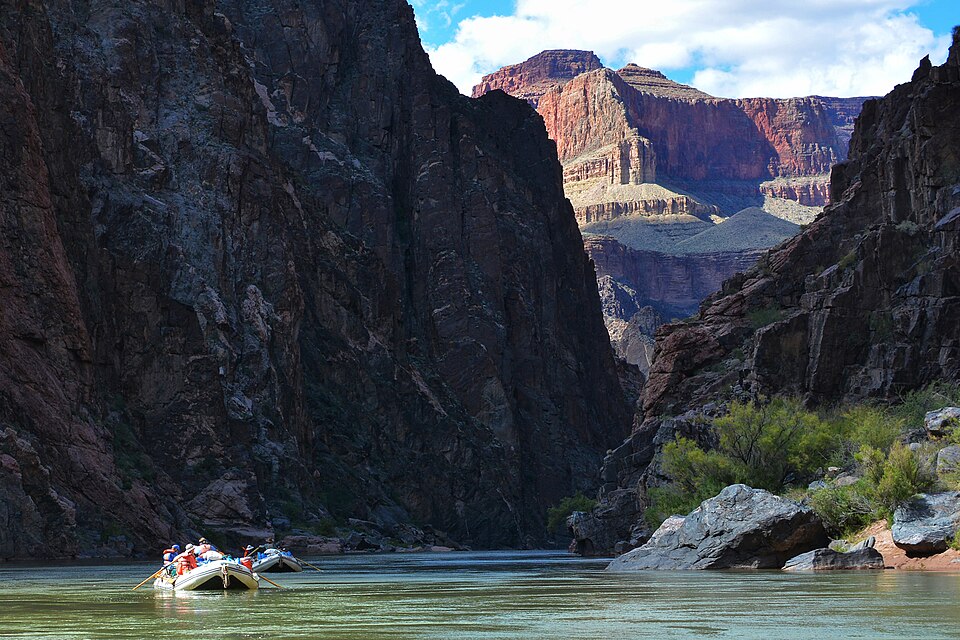
The Colorado River lies far below the main South Rim viewpoints; this is not a destination where you casually walk down for an afternoon swim. River trips require substantial advance planning and may involve permits or authorized outfitters. If water is central to your trip, research that experience separately rather than treating it as an easy addition to a rim sightseeing day.
 Step 4
Make the Canyon Engaging for Kids
Keep family outings short and varied: one overlook, a manageable rim walk, a snack break, and an indoor geology stop often work better than a full day of driving between viewpoints. The Trail of Time offers a way to connect the canyon's enormous age with a physical walk. Adjust the distance to your children's energy and the weather.
Ask about the park's Junior Ranger program and current ranger activities through official visitor information. Give children simple observation challenges, such as spotting rock layers or comparing colors between overlooks. Stay well back from edges, supervise closely, and remember that not every rim section has a barrier. Confirm accessible routes if traveling with a stroller.
Step 5Use Rainy Hours for Geology and Trip Planning
When rain or thunderstorms interrupt sightseeing, consider the Yavapai Geology Museum or available visitor center exhibits. These stops help explain the rock layers, landscape, and human history that can be difficult to absorb while standing at a windy overlook. Check the official park website for current facility access and programs rather than assuming every indoor space is available.
Use a weather break to review the next day's trail conditions, shuttle information, and route. During lightning, seek substantial shelter or an enclosed vehicle, not an exposed viewpoint or isolated tree. After a storm, visibility may improve dramatically, but only return outside when conditions allow. Wet or icy paths deserve a slower pace.
Quick answers about Grand Canyon
What are the top things to do in Grand Canyon?
Highlights include Walk the Rim and Explore the Scenic Roads, Choose a Short Below-Rim Hike, Watch Wildlife and Understand River Access, Make the Canyon Engaging for Kids.
How much time do you need to see Grand Canyon?
Plan 3–4 days to cover the main sights at a comfortable pace.
When is the best time for activities in Grand Canyon?
March – May, September – November usually offers the widest choice of open activities and tours.
Airport car & SUV rentals

- ✓ Compare suppliers at FLG
- ✓ Free cancellation on many rates
Standard car rentals at FLG
Est. from $45/day · typical rate
Pick your dates and vehicle class.
Compare rates at FLG
- ✓ Compare suppliers at FLG
- ✓ Free cancellation on many rates
SUV rentals at FLG
Est. from $55/day · typical rate
Pick your dates and vehicle class.
Compare rates at FLGViator
Tours & experiences near Grand Canyon
Explore guided activities around Grand Canyon. Check the meeting point, dates and availability on Viator before booking.
Open tour listings separately